




News & Insights
Expert perspectives. Company updates. Industry intelligence.
Stay informed with the latest news, insights and achievements from Sanding America.
 News
Supporting a Major Renewable Energy Infrastructure Project
News
Supporting a Major Renewable Energy Infrastructure Project
Supporting a Major Renewable Energy Infrastructure Project
Aug 08, 2026 | Project News
Hero Summary
Renewable energy projects require more than reliable electrical equipment—they demand close coordination between engineering,manufacturing,quality assurance,logistics,and project teams.From initial technical review through factory testing and final delivery,every stage of the project contributes to long-term system performance.Sanding America supports renewable energy developers,utilities,and EPC contractors with transformer solutions engineered to meet project-specific requirements while maintaining consistent quality,dependable execution,and responsive technical support.
Project Background
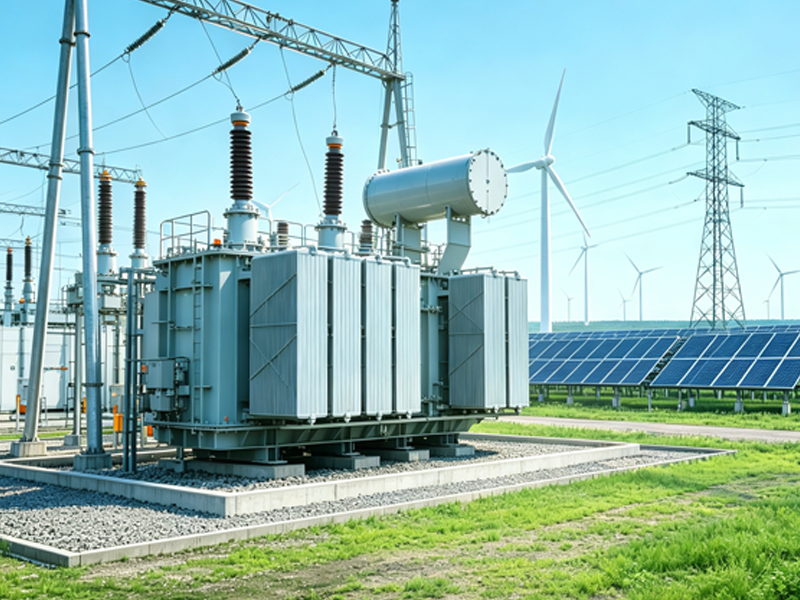
Across North America,investment in renewable energy continues to accelerate as utilities,independent power producers,and infrastructure developers expand generation capacity to meet growing electricity demand.Large-scale solar,wind,and battery energy storage projects are becoming increasingly common,requiring electrical infrastructure capable of supporting both today's operating conditions and future grid expansion.
Unlike conventional generation projects,renewable energy facilities often present unique engineering and logistical challenges.Sites may be located in remote areas,environmental conditions can vary significantly,and operating profiles differ depending on generation technology.These projects also involve close coordination between utilities,engineering consultants,EPC contractors,equipment manufacturers,and commissioning teams.
Transformers serve as one of the most critical components within these facilities.Their performance directly affects voltage regulation,grid connection,operational reliability,and long-term system efficiency.
For this project,Sanding America provided engineering support and transformer solutions designed around the specific technical and operational requirements of the application while working closely with project stakeholders throughout execution.
Understanding the Engineering Requirements
Every renewable energy project begins with a detailed engineering review.
Rather than selecting a standard transformer configuration, engineers first evaluate the complete electrical system to understand how the equipment will operate throughout its service life.
Technical considerations typically include:
● System voltage
● Load profile
● Grid interconnection requirements
● Environmental conditions
● Ambient temperature
● Cooling methods
● Harmonic performance
● Short-circuit requirements
● Installation limitations
● Transportation requirements
By reviewing these factors early in the project, engineering teams can identify potential challenges before manufacturing begins.
This collaborative approach helps reduce redesign, improve schedule certainty, and ensure that transformer performance aligns with the overall objectives of the project.
Designing a Solution Around the Application
No two renewable energy facilities are identical.
Differences in site conditions, operating characteristics, utility requirements, and project specifications often require customized engineering solutions rather than standard product configurations.
Throughout the design process, Sanding America works closely with project stakeholders to ensure transformer configurations are aligned with both technical requirements and long-term operational goals.
Engineering activities include electrical calculations, mechanical design review, insulation coordination, thermal evaluation, and manufacturing planning.
This integrated design process allows engineering teams to balance performance, manufacturability, transportation, maintenance accessibility, and lifecycle reliability.
The objective is not simply to manufacture equipment that meets specification, but to deliver transformer solutions that perform reliably throughout the operational life of the facility.
Manufacturing and Quality Assurance
Reliable transformer performance depends on disciplined manufacturing supported by comprehensive quality management.
After engineering documentation is approved, production follows standardized manufacturing procedures designed to maintain consistency throughout every stage of fabrication and assembly.
Quality activities include:
● Incoming material verification
● Process inspections
● Assembly checkpoints
● Dimensional verification
● Electrical testing
● Documentation review
Every transformer is manufactured under controlled procedures that emphasize repeatability, traceability, and compliance with project specifications.
Prior to shipment, completed equipment undergoes comprehensive factory acceptance testing to verify electrical performance and confirm that manufacturing requirements have been satisfied.
These activities help reduce project risk while providing customers with confidence before installation begins.
Coordinating Delivery and Project Execution
Manufacturing represents only one phase of a successful infrastructure project.
Large transformer deliveries require careful coordination between production schedules, transportation providers, site construction activities, and customer project teams.
Logistics planning considers equipment dimensions, transportation routes, lifting requirements, storage conditions, and installation sequencing well before shipment.
Maintaining open communication throughout these activities helps reduce delays and improves coordination among all project participants.
Depending on project requirements, technical support may also continue during installation and commissioning to assist with equipment verification and field coordination.
This collaborative approach supports a smoother transition from manufacturing to operational service.
Delivering Long-Term Customer Value
Successful renewable energy projects are measured by more than equipment delivery.
Customers require engineering partners capable of providing dependable communication, disciplined execution, and consistent product quality throughout the project lifecycle.
By combining application-focused engineering, controlled manufacturing, comprehensive testing, and coordinated project management, Sanding America helps customers reduce uncertainty while supporting reliable infrastructure development.
This approach also contributes to long-term operational performance by ensuring that transformer solutions are designed around actual project requirements rather than generalized product specifications.
For utilities, renewable developers, EPC contractors, and industrial customers, the result is greater confidence throughout procurement, manufacturing, installation, and future operation.
Looking Ahead
Renewable energy will continue to play an increasingly important role in North America's electrical infrastructure.
As projects become larger and technically more sophisticated, collaboration between engineering teams, manufacturers, utilities, and project developers will become even more important.
Sanding America remains committed to supporting customers through practical engineering, disciplined manufacturing, transparent communication, and dependable project execution.
By focusing on quality, reliability, and long-term customer partnerships, the company will continue helping utilities, renewable developers, and infrastructure owners build electrical systems prepared for the evolving demands of tomorrow.

PROVEN PERFORMANCE IN THE FIELD
See how our reactor solutions help utilities and industries around the world improve grid stability and power quality.