




News & Insights
Expert perspectives. Company updates. Industry intelligence.
Stay informed with the latest news, insights and achievements from Sanding America.
 News
Supporting Grid Modernization Across North America
News
Supporting Grid Modernization Across North America
Supporting Grid Modernization Across North America
Aug 08, 2026 | Engineering Insights
Hero Summary
Across North America, utilities are making significant investments to modernize aging electrical infrastructure while preparing for increased electricity demand driven by renewable energy, industrial expansion, electrification, and digital transformation. Reliable transformer solutions remain fundamental to this transition, helping strengthen grid resilience, improve operational efficiency, and support long-term infrastructure development.
Modernizing an Aging Power Grid
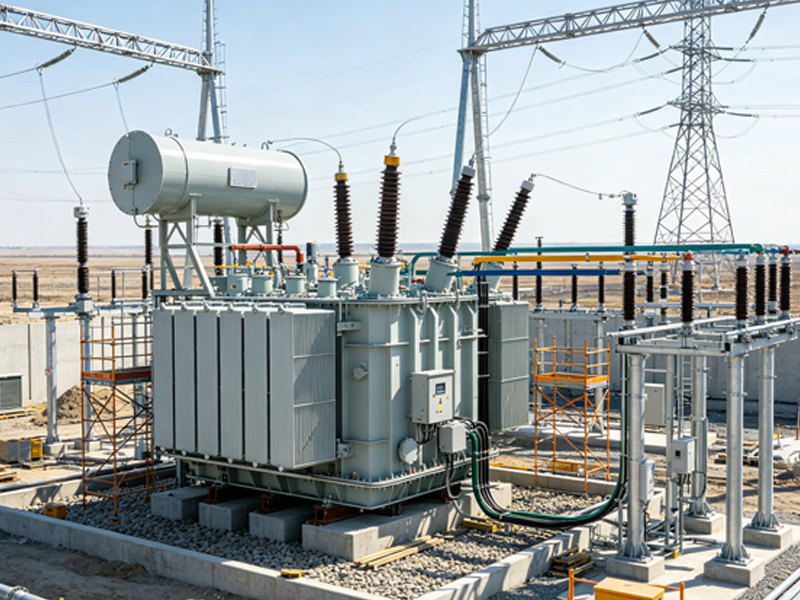
The electrical grid that powers much of North America was built over several decades. While many assets continue to perform reliably, increasing electricity demand, aging infrastructure, and changing generation sources have created new challenges for utilities, transmission operators, and industrial customers.
Today's power networks must support a significantly more dynamic operating environment than they were originally designed for. Renewable generation, battery energy storage systems, electric vehicle charging infrastructure, large manufacturing facilities, and hyperscale data centers are placing new demands on transmission and distribution systems.
Grid modernization has therefore become a long-term strategic priority rather than a single equipment replacement program.
Utilities are investing in stronger transmission networks, digital monitoring systems, substation modernization, and higher-performance electrical equipment capable of supporting future growth while maintaining system reliability.
Why Transformer Technology Matters
Transformers serve as one of the most critical components within modern electrical infrastructure.
They regulate voltage between generation, transmission, distribution, and end-use applications while helping maintain power quality and system stability.
As utilities upgrade substations and transmission corridors, transformer performance becomes increasingly important.
Modern transformer solutions must provide:
● High operational reliability
● Long service life
● Efficient thermal performance
● Stable voltage regulation
● Low maintenance requirements
● Compliance with utility specifications
● Support for future system expansion
Each project requires careful engineering to balance electrical performance, efficiency, mechanical strength, transportation limitations, and lifecycle cost.
Rather than selecting equipment solely by rating, successful infrastructure projects evaluate the complete operating environment to ensure the transformer supports both present and future system requirements.
Engineering for Complex Infrastructure Projects
No two infrastructure projects are identical.
Every utility operates under different technical standards, environmental conditions, and operational objectives.
For this reason, transformer engineering begins with understanding the application rather than selecting a standard product.
Project teams evaluate numerous factors before finalizing a transformer design, including:
● System voltage
● Loading profile
● Ambient temperature
● Altitude
● Harmonic conditions
● Fault current requirements
● Cooling configuration
● Sound limitations
● Installation constraints
● Transportation logistics
Early engineering collaboration helps identify potential issues before manufacturing begins, reducing project risk while improving schedule confidence.
Close coordination between utilities, engineering consultants, EPC contractors, and manufacturers also improves documentation quality and minimizes late-stage design changes.
Manufacturing with Quality at Every Stage
Engineering excellence alone cannot guarantee reliable equipment.
Consistent manufacturing processes are equally important.
High-quality transformer production depends on disciplined process control throughout every stage of manufacturing.
Material verification, dimensional inspections, winding assembly, insulation processing, tank fabrication, electrical testing, and final quality review all contribute to long-term equipment reliability.
Every manufacturing step should follow documented procedures supported by qualified personnel, calibrated equipment, and traceable quality records.
Factory Acceptance Testing (FAT) provides another important checkpoint before shipment.
Routine electrical testing verifies that the completed transformer meets the agreed technical requirements and applicable industry standards.
Comprehensive documentation also supports future commissioning, maintenance planning, and lifecycle asset management.
Building Infrastructure for the Future
North America's energy landscape continues to evolve.
Population growth, industrial investment, renewable generation, and digital infrastructure are expected to increase electricity demand for decades to come.
Grid modernization is therefore not simply a replacement of aging assets—it is the foundation for future economic development.
Reliable electrical infrastructure enables communities, manufacturers, hospitals, transportation systems, data centers, and renewable energy projects to operate safely and efficiently.
Transformers will remain one of the most important components supporting this transformation.
As infrastructure investment continues, utilities increasingly value engineering partners capable of providing technical expertise, dependable manufacturing, transparent communication, and long-term service support.
Looking Ahead
The modernization of North America's electrical grid will continue to create opportunities for innovation across engineering, manufacturing, and project execution.
Sanding America remains committed to supporting utilities, EPC contractors, industrial customers, and infrastructure developers through application-focused transformer solutions designed around quality, reliability, and long-term performance.
By combining disciplined engineering, controlled manufacturing, comprehensive testing, and responsive customer support, the company aims to help customers build electrical infrastructure prepared for the demands of tomorrow.



PROVEN PERFORMANCE IN THE FIELD
See how our reactor solutions help utilities and industries around the world improve grid stability and power quality.